Providing power is a problem in classrooms and other locations with movable furniture. I was reminded of this today when I watched two workers fit power sockets to a desk in a library. After twenty minutes they had the desk assembled and then left, but there was a mains power plug hanging down from under the desk with nothing to plug it into.
Pixelated Induction (PI) claim to be able to deliver standard inductive charging charging for mobile
devices, on a scale suitable for airport lounges and cafes. However, how do you get the power to a movable desk? It occurred to me that the same technology which gets the power from the desk to the phone could be used to get it from the floor to the desk.
A plate on the floor would have an inductive unit installed. Movable desks would have a curly cord and inductive charging plate hanging underneath. Magnets in the floor and plate would make connection easier. Power would then be available on the desktop through another inductive plate. The floor unit could have four inductive units in a grid, allowing four phones to be charged on the desktop. Removable unit could also be made, so that no modification of the desk was needed. A USB port would be a useful option for charging laptop and tablets.
For innovation hubs and similar localizations with large numbers of itinerant users, there might be long flexible strips with a induction charger built in every 450 mm. One of these strips would be laid down the middle of a long row of desks.
A useful initial market to explore with this technology is not schools, libraries or airport lounges, but military command centers. The reality is not as meritorious as the pristine rooms depicted in fiction. There are always cables draped everywhere, connecting equipment brought in and packed up again frequently. It would be very useful to be able to provide desktop power without cabling. I saw this first hand on board the USS Blue Ridge. A complete military solution might also include a tacky surface, similar to that used for holding mobile phones to car dashboards (the US Marines use gaffer tape to secure their equipment to the ship's desks). Australia has recently commissioned the second of two Landing Helicopter Dock (LHD) ships, which have a similar requirement.
Showing posts with label Innovation ACT. Show all posts
Showing posts with label Innovation ACT. Show all posts
Thursday, November 17, 2016

Tuesday, February 17, 2015
Bringpeer: Building a Better Social Network for University Students
Last year I mentored the "Bringpeer team" in the Innovation ACT competition. The idea was to building a better social network for university students, starting with the Australian National University (ANU). The team did not win the competition, but the ANU saw enough promise in the idea to support the start-up. The product was launched during "O-week", with more than three hundred students signed up so far.
I will be speaking on "Innovations in teaching innovation", at the CSIRO ICT Centre, Center, Australian National University in Canberra, 4pm, 27 April 2015.
I will be speaking on "Innovations in teaching innovation", at the CSIRO ICT Centre, Center, Australian National University in Canberra, 4pm, 27 April 2015.
Wednesday, November 12, 2014
New Innovation Space Opens In Canberra's Innovation Precinct

In recent years the area adjacent to ANU has seen small IT startups and private education providers move in between the cafes, bars and theaters. Entry 29's provided co-working space (a desk, or a few desks) for micro-businesses with ambitions, in a former building site office. Entry 29 has now moved into the new offices at 1 Moore Street, joining the Griffin Accelerator program and an incubator managed by ATP Innovations.
The new offices only opened last week and are still being set up. Such innovation spaces are traditionally in re-purposed buildings. Fishburners in Sydney is in a colonial era warehouse (with massive timber beams on the ceiling) and Spacecubed in Perth an old bank (with a meeting room in the vault). But CBR Innovation is on the top floor of the old ACT Health building opposite the Canberra Post Office (walk in the wrong door on the ground floor and you would think you are in a hospital).
The new offices are already well equipped, but there are plans to expand to add space for start-up business which have expanded past the micro-business stage and need their own partitioned area, not in the co-working space. This will take some careful design, to provide separation, nut not wall this area off completely from the open areas. The innovation space I saw at the Sri Lanka Institute of Information Technology (Colombo) were a little too isolated.

Innovation ACT is holding a IACT Canberra Innovation Network Workshop at the new offices on 22 November 2014. Innovation ACT is an annual conference sponsored by the ACT Government for students of Canberra's higher education institutions (with about $70,000 in prizes). ANU students can now enroll for credit in my special topic for 2015 "Commercialisation and Entrepreneurship in Technology", to earn credit while participating in the competition.
Saturday, October 25, 2014
Innovation ACT Awards

The winners were:
- BehavioMatrix: This team is producing a diagnostic aid for depression. This would use sensors rather than a questionnaire or practitioner's opinion.
- KRIGE TECH: are offering a smart power system using switches controlled by a smart-home app to reduce energy use.
- OzGuild: This team scans trading cards for the "Magic: The Gathering" card game.
- Siege Sloth Games: producing more non-violent computer games (from the Academy of Interactive Entertainment).
- Vacant Space: provides vacant shops to artists and artisans.
Also there was mention of a new China Australia Innovation center at Kingston in Canberra, but I have seen any formal announcement of this.
Wednesday, October 22, 2014
Innovation ACT Pitch Night
 Greetings from the pitch night of Innovation ACT, where teams of university students are competing for prizes by presenting their business ideas. The event is being held in the Inspire Center at University of Canberra. This was an excellent event (even though the team I was mentoring did not make it to this round). In August I dropped in on Philippe Kruchten at UBC in Vancouver to hear about his "New Venture Design"
course, where students
are encouraged to
enter a innovation competition as part of their studies. I am designing a similar course to be run alongside Innovation ACT.
Greetings from the pitch night of Innovation ACT, where teams of university students are competing for prizes by presenting their business ideas. The event is being held in the Inspire Center at University of Canberra. This was an excellent event (even though the team I was mentoring did not make it to this round). In August I dropped in on Philippe Kruchten at UBC in Vancouver to hear about his "New Venture Design"
course, where students
are encouraged to
enter a innovation competition as part of their studies. I am designing a similar course to be run alongside Innovation ACT.
The pitches:
1. The first team "Vacant Space" are promoting an advanced version of the "Renew Leichhardt" initiative in Sydney, which provides vacant shops to artists and artisans.
2. Team "KRIGE Tech" are offering a smart power system using switches controlled by a smart-home app. This is claimed to reduce energy use. However, I am skeptical that such remote controls save any energy, whereas simpler automation in individual devices does.
3. Siege Sloth Games are producing more non-violent computer games. This seemed the most mature of the pitches. The graphics were good (which they should be for a computer game project).
4. Bio-Mine: This initiative is for electronic certificates, similar to the Digitary service (based in Ireland). While ANU already uses Digitary (I was issued with a digital Grad Cert in Higher Education). However, I found Digitary's system clumsy to use and it has not had a high take-up. There is therefore room for a better product. One interesting aspect is that Bio-Mine proposes to charge the graduate an annual fee and pay the university a commission. Also they plan to link this to the Intellidox product which ANU already has a relationship with. This sounds very promising.
5. BehavioMatrix: This team is producing a diagnostic aid for depression. This would use sensors rather than a questionnaire or practitioner's opinion. I am not qualified to asses the clinical validity of the technique, but if it works this could be a good business.
6. OzGuild: This team scans trading cards so that collectors can search for cards to complete their collection. While pitched for the "Magic: The Gathering" card game, but could be applied to other collectible cards.
7. Ingiv: This team organizes volunteers for non-profit organizations online. While pitched for non-profit organizations this may also be attractive for for-profit organizations who encourage staff to volunteer to work on projects. In many cases the companies have difficulty keeping track of what their staff have volunteered for.
8. CanBAR: This team has the best logo of the night (a stylized cocktail glass with a Google style map pin as the cocktail stick). Their product provides demographics of patrons for cocktail bar owners, via an App.One technique the team might try at their next pitch is to hand out cocktails. I was part of a team pitching a line of boutique spirits at one such event and we handed out drinks to the judges, which put them in a good mood. ;-)
9. Meeting Cost and Timer: This App is billed as "The Taxi Meter for Meetings". It estimates the cost of a meeting, in terms of staff and other resources used. This might be fun to have on a large screen during a meeting. Of course the solution is not to have meetings. I am not so sure about having his in the Microsoft Office Apps store. what I would like is an application for preparing for meetings, which would prompt for all the necessary materials for a good meeting and prompt those involved to try to complete tasks before the meeting, thus eliminating the need for a meeting. I noticed there are some simple Meeting Meters already, such as "Meeting Cost Meter".
10. Young Money: Comparing insurance policies for young people is the topic of this product. It was not clear how this would differ from the many insurance comparison websites already available.
Based on the presentations, my ranking of the teams from highest to lowest would be:
- Siege Sloth Games
- Bio-Mine
- OzGuild
- Ingiv
- CanBAR
- KRIGE Tech
- BehavioMatrix
- Vacant Space
- Meeting Cost and Timer
- Young Money
Wednesday, September 24, 2014
Canberra Innovation Network

Innovation Network". Sarah had much news about the development of new high technology products in Canberra.One example was "DataPod Modular Data Centres" and another was IntelleDox. Sarah mentioned numerous other successful Canberra based high tech products which most of the audience had never heard of. One way to promote Canberra as a centre for such innovation could be simply to let people know what has already happened. One way would be to have better websites with details of these, the problem being that companies are reluctant to mention they are in Canberra and the ACT Government has tended to build websites which are not well indexed by search engines. At the moment I am mentoring a team of ANU students competing the the "Innovation ACT Competition" sponsored by the ACT Government. My suggestion for promoting Canberra was in: "Building Arcadia: Emulating Cambridge's High Technology Success". Recently in Vancouver for ICCSE 2014 I dropped in on Philippe Kruchten at UBC Electrical and Computer Engineering. He is involved with the "New Venture Design" course (APSC 486), where engineering and business students learn to produce a business plan for a product. The students are encouraged to enter a innovation competition or program as part of the course.
Sarah said CBR Innovation Network would have a simple one page website and then look at how to build a system for matching up people. My suggestion would be to use a free open source text web software, so that the information is well indexed (it does not have to look good). How to link up people is not a solved problem and the organisation should not waste too much time on complex software (SpaceCubed in Perth use Yammer, as do CSIRO).
I asked Sarah if "Canberra" was a good brand for selling high tech products in Australia, particularly to the Federal Government which prefers to buy imported products. She replied that CBR Innovation Network was building on the ACT Government's "CBR" brand (which I had never heard of). It may be that the Canberra Innovation Network needs to have two promotional strategies: one for within Australia which does not mention Canberra, and one for international use which does.
The use of the abbreviation "CBR" in marketing Canberra makes no sense for high technology products and would be of very limited use even for tourism. The Wikipedia lists dozens of meaning of CBR, including Chemical Biological and Radiation weapons. One near the bottom of the list is the international airport code for Canberra International Airport. That is not going to be much use to an international tourist, as there are no scheduled international flights to Canberra. In contrast I find that people have heard of "Canberra" as being a government city, even if they think Sydney is the capital of Australia.
From: CBR Innovation Network: promoting innovative businesses, 09/04/2014
- The network will deliver services, programs and support to a wide cross section of growth oriented companies and entrepreneurs;
- The network will have a physical location and will also have a charter of outreach that establishes multiple delivery points or partner delivery arrangements;
- It will be managed by the stakeholders under a governance structure shaped and agreed by the stakeholders. Potential stakeholders include the ANU, CSIRO, NICTA and the University of Canberra and other partners who want to join the network. The ACT Government will also have representation on the management body for the network;
- The network will be structured so that smaller players are able to have a role in the direction of the network;
- The ACT Government will contract the network to provide a range of services to potential high growth businesses, including mentoring, access to capital, skills development, managerial skills and links to international supply chains amongst many;
- The network will provide a 'triage model' for all entities that contact it, but with services that engage quite deliberately and effectively with potential high growth businesses; and
- The services of the network will be made available to all potential high growth companies, not just companies spun out of research institutions or ICT companies.
Tuesday, July 29, 2014
Innovation ACT 2014 Launch

InnovationACT 2014 Launch
This year, the program is undergoing some exciting changes, aimed at:
- Increasing the learning and toolkits provided to participants;
- Increasing the diversity supported ventures by catering to high-growth startups, social ventures and microbusinesses;
Date:13/08/2014
Time: Doors open 5:30 for refreshments and networking. Event begins 6:00pm
During the launch, you will find out more about these exciting changes, see how InnovationACT fits in with your entrepreneurial aspirations, and get the opportunity to meet people who could become your future team-mates...
InnovationACT will be hosting the ANU Entrepreneur Society’s Annual Pitch Night...
Saturday, March 29, 2014
What is the Griffin Accelerator Program?


Wednesday, May 22, 2013
Opening of the Entry 29 Co-working Space at ANU in Canberra
Greetings from the opening of the Entry 29 Co-working Space at the Australian National University in Canberra. One of our local MPs is joking about how when you see an innovation meeting with half of the people in suit and the other not, the ones with the suits are the lawyer and the ones without are the innovators. The co-working space is in an old demountable site office (such start-up spaces are traditionally in converted warehouses). The idea is to provide low cost office space for people starting a company and to put them close together with others they can collaborate with. An issue for me is how this can be integrated with the formal programs of the university. ANU runs "Innovation ACT" to encourage students to take their ideas further, but this is not part of their formal students (not for credit).
Saturday, March 09, 2013
Offer coursework students space at the university?
Last Tuesday I attended the Sydney Educational Technology (SydEduTech) Group at the Fishburners Sydney Co-working Space. This is a non-profit cooperative which provides low cost office space to new start-up businesses. It occurred to me that for $3,600 per year the Fishburner member gets a similar amount of desk space to a university PHD student. Perhaps universities could expand their postgraduate office areas, re-brand it "innovation space" and offer it "free" to postgraduate coursework students. Full time students enrolled in "innovation" courses would get their own dedicated desk (the innovation courses would consist of something like "Innovation ACT", plus some assessment and supervision). Part time students would get a set number of hot desk hours per month, per course.
Wednesday, March 06, 2013
Fishburners Startup Workspace in Sydney
Last night I attended the Sydney Educational Technology (SydEduTech) Group and talked about "MOOCs with Books" at the Fishburners Sydney Co-working Space. Originally I had assumed that "Fishburners" was the name of a fish restaurant, but it turned out to be a building dedicated to providing low cost shared office space to new start-up businesses (including a 3 days for free trial). The building is an old warehouse converted to offices in New York loft style (there is als an office in Darlinghurst). There is a shared kitchen, games and presentation room, where we had the SydEduTech meeting. It happens that some of the occupants of the building I recognized as fellow participants in the Canberra Innovation ACT program at the ANU, where we were learning how to deveop a new business idea.
The name Fishburners come Fishburn, which was one ships of the first fleet which arrived in Sydney in 1788. It is not clear why the enterprise is named after the ship. But this is not the first hi-tech venture to have a confusing name.
The name Fishburners come Fishburn, which was one ships of the first fleet which arrived in Sydney in 1788. It is not clear why the enterprise is named after the ship. But this is not the first hi-tech venture to have a confusing name.
Monday, February 18, 2013
Australian Industry Innovation Precincts Proposed
The Australian government has proposed up to ten Industry Innovation Precincts at a cost of $500M to "drive productivity, improve connections between business and the research sector and mobilise Australian industry to compete more successfully in global markets." Each precinct will have a
research organization (university or CSIRO) as well as business, to foster
mobility between academic institutions and businesses.
Available are:
In Canberra the "Innovation ANU" program was et up to teach university students how to turn a scientific discovery into a business. This was later was was broadened to "Innovation ACT" for students at all Canberra's universities. I suggest that program could be broadened again and delivered on-line to students at all the ten new Innovation Precincts, and elsewhere across Australia. Such a program could combine nationally delivered on-line materials with local "un-conference" events, which bring people from different fields together. A good example of an unconferecne is BarCamp Canberra, this year at the Inspire Centre, University of Canberra, 16 March (purpose built for this type of learning event). A national innovation program could offer participants a formal university qualification, counting towards a degree.
 The new policy mentions CSIRO, but curiously does not mention NICTA. The investment of $50M per precinct proposed in the new government policy is minimal compared to the cost of initiatives such as NICTA and CSIRO. However, this would be useful in making linkages between research and industry, if used to accelerate already emerging precincts. An example is "City West, with the ANU Exchange development, to the west of the Canberra CBD, where the ANU campus is blending with government and private enterprises, related to education and research.
Available are:
- Executive Summary
- The full statement: "A Plan for Australian Jobs: The Australian Government's Industry and Innovation Statement
- Media release: "Industry Innovation Precincts to create jobs of the future", Media Release, Minister for Industry and Innovation, the Hon Greg Combet AM MP, and the Minister for Agriculture, Fisheries and Forestry, the Hon Joe Ludwig, 17 Feb 2013
In Canberra the "Innovation ANU" program was et up to teach university students how to turn a scientific discovery into a business. This was later was was broadened to "Innovation ACT" for students at all Canberra's universities. I suggest that program could be broadened again and delivered on-line to students at all the ten new Innovation Precincts, and elsewhere across Australia. Such a program could combine nationally delivered on-line materials with local "un-conference" events, which bring people from different fields together. A good example of an unconferecne is BarCamp Canberra, this year at the Inspire Centre, University of Canberra, 16 March (purpose built for this type of learning event). A national innovation program could offer participants a formal university qualification, counting towards a degree.
The new policy mentions CSIRO, but curiously does not mention NICTA. The investment of $50M per precinct proposed in the new government policy is minimal compared to the cost of initiatives such as NICTA and CSIRO. However, this would be useful in making linkages between research and industry, if used to accelerate already emerging precincts. An example is "City West, with the ANU Exchange development, to the west of the Canberra CBD, where the ANU campus is blending with government and private enterprises, related to education and research.
Monday, January 14, 2013
Teaching Entrepreneurs
In "Starting Young" (BBC World Service, Global Business, 12 January 2013), Peter Day talked to new graduates undertaking the UIK Entrepreneur First program to teach them how to launch a new business. The Australian National University started a similar program in 2008, which is now open to students at other Canberra tertiary institutions, called "Innovation Act". These programs encourage students to form a team, prepare a business plan and pitch their idea. One flaw with these programs is that they tend to emphasize face-to-face contact and do not teach on-line skills. Also these programs could be used as part of university degree programs (particularly postgraduate programs) rather than as an extra-curricular activity.
Thursday, October 25, 2012
Ninety Seconds to Business Success
Greetings from the first Semi-Final Pitch Night of the Innovation ACT competition at the Australian National University in Canberra. Teams are competing with ninety second pitches of business ideas to expert venture capital judges. It is a fun night with an audience throwing questions at the competitors. There is then a later phase for assessment of business plans.
Ideas pitched were from the areas of entertainment, education, transport and tourism. Many are web based e-commerce intermediates, providing a connection between the retail customer and supplier. Also there is much mention of the use of social media. Many are offering products to university students, which is not surprising as the competitors are students (and it turns out that students are a good market).
Some ideas are for not-for-profit ventures for community benefit. These are allowed under the rules of the competition, but the judges from for-profit venture capital companies appear a little uncomfortable with the idea.
Ideas pitched were from the areas of entertainment, education, transport and tourism. Many are web based e-commerce intermediates, providing a connection between the retail customer and supplier. Also there is much mention of the use of social media. Many are offering products to university students, which is not surprising as the competitors are students (and it turns out that students are a good market).
Some ideas are for not-for-profit ventures for community benefit. These are allowed under the rules of the competition, but the judges from for-profit venture capital companies appear a little uncomfortable with the idea.
Tuesday, October 16, 2012
Dejan Andrevski on Pitching an Innovation
 Greetings from Innovation ACT at the Australian National University in Canberra, where Dejan Andrevski is facilitating a workshop on Refining Your Pitch. This is to help teams of Canberra university students and staff who are competing for prizes based on their presentation of a business idea.
The six questions Dejan suggested you need to present are: what is the product, who is the market, where will revenue come from, who are you, who is the competition and what is you advantage. He suggested limiting the pitch to about 200 words. It seems to me that the pitch needs to be about as long as Tweet, which is 140 characters (allowing for abbreviations used in text messages this is about the same as 200 words of spoken text). Dejan suggests including something visual, preferably a demonstration.
At question time the participants put Dejan on the spot by asking him to give the pitch for one of his start-ups. I did a quick search and found a video made about one of these "GiftaBall". It is not a video of the pitch, but instead an short video about the product.
Last week, at the 2012 Walter Burley Griffin Memorial Lecture, both Lucy Turnbull and and Professor Alastair Swayn (ACT Government Architect) mentioned the role of universities in promoting innovation and spinning off new industries. The ANU was mentioned in particular. The Innovation ACT events are held at ANU Commons, a new building on the edge of the campus, in the innovation zone between the formal campus and the Canberra CBD. This is becoming a zone for innovation industry.
As part of the learning experience I made up a product idea, so I had something to try pitching:
Team BooKs: Our product is online accredited courses for masters and PHD university students. Universities now have to compete globally for students. Those students want vocationally relevant and accredited qualifications, usable across the world. We offer universities packaged on-line courses branded with their logo, pre-approved by global and leading national professional standards setting body. This allows universities to avoid complex national approval processes and offer a global qualification as part of their program. We charge the university a fee to use the course. We are a team of award winning professional educators, with the contacts to navigate the complex approvals processes. Individual universities and some consortia offer accredited courses for some countries, but tend not to address global requirements. Some universities and non-profit bodies now offer free online courses, but these are not recognised by accreditation bodies and have a high drop-out rate.
Thursday, October 11, 2012
A Life in Technology

Peter made the point that a start-up company has to be about business, not just a hobby. The company has to have a a global outlook, even if it is initially aiming for a local market. Also there needs to be a clear and simple message about what the company does and how it can grow. He reminded the audience that they need to ask their customer what they need, rather than telling them.
Peter gave the example of his cloud computing company Ninefold, which offers an Australian hosted service. They have no sales people making cold calls on businesses, instead attracting business on-line. When I went to their website I noticed a box pop up offering a real time conversation with the sales or support staff.
Peter argues that a start-up should not have an "exit" strategy, as the focus should be on building the business and wait for someone to approach who has an interest in investing and in what the business does.
Peter was disparaging about the adulation of Silicon Valley USA and gave the example of "Startup Saturday India". He mentioned Startup Saturday Bangalore , but I see there is also a Startup Saturday Goa the same day (if you go also visit the Kala Academy).
Tuesday, October 02, 2012
Learning to Turn University Research into a Business

The workshop used a simple "Business Planning Canvas" one page quad chart. This was to emphasise that a new business idea needs to be clear and not hidden behind a large amount of complex jargon. The product has to focus on solving a problem for one customer, not the world in general.
The first workshop exercise to state simple what the customer "problem" was and what the solution is. Of interest to me at the moment is research supervision so I used that:
- Problem: University researcher supervisors generally have poor people skills, but do not what to acknowledge this and are reluctant to undertake teacher training. As they have a higher degree and have done research, supervisors assume they know how to supervise students. However, most supervisors have had no formal training in teaching and so do not necessarily have good people skills. But as highly technically qualified people they are reluctant to acknowledge this and will not attend teacher training courses,
- Solution: Have a highly respected researcher, such as a Noble prize winner say how important it is to have people skills training this could be in person at research conferences and an on-line video. Have trainers go into the lab, dressed as a researcher (white lab coat not a business suit) to introduce the concepts also have on-line videos of the person in the lab coat. Offer on-line courses which do not mention teaching, but instead use research terms.
- Value Proposition: Access to leading researchers and people who are your sort of people. A graduated process to help research supervisors.
- Competitive advantage: Exclusive access to Nobel prize winners and other leading researchers. An understanding of how research is done. Associated with Australia's leading university and one of the few in the world with national government endorsement. Looking from the supervisors point of view, not the student (as teacher training does).
- Channels: Provide documents on the web written in scholarly language formatted simply like research papers, so that researchers will find them in a search for academic material and find it credible. Write formal academic papers which discuss the development and testing of the product so this will be found in formal searches by researchers.
- Partners: Have the university media unit help promote the product. Put links to the product web site from the university web site (which has a high web search engine ranking). Promote via the university cafes and bars (which were where scholarly discourse had is origins).
- Cost: Capital expenditure (Capex): preparation of online materials and negotiating deals with talent. Operational Expenditure (OpEx): web site maintenance and paying talent.
- Revenue: Web advertisements on "free" on-line materials. Universities can pay to have their own branding on the materials, in place of the ads, for their own staff to use.
Wednesday, September 19, 2012
Innovation in Sixty Seconds at the Bar
Greetings from the Fellows Bar of the Australian National University in Canberra where teams are pitching their ideas for the Innovation ACT competition. It may seem odd to use a bar in the basement of University House as the venue for presentations about new business ideas, but this provides a challenging environment to test the communication skills of potential entrepreneurs. Just as Australian rock music trained in the pubs of Australia, the innovators of tomorrow are having to compete with the distractions of the bar to get their message across in sixty seconds. Mentors from Australian industry listen to the pitches and decide which team they would like to help for the next formal round of the competition. 

Friday, September 14, 2012
Markets and Models for Startup Businesses
Greetings from the Innovation ACT Strategy, Markets & Business Models Seminar. at the Australian National University in Canberra. First Miguel Carrasco, Partner at The Boston Consulting Group (BCG)is presenting on the external environment and future demand for a product. He asserted that the goal of a strategy should be to win and have a long term sustainable business.
BCG are known for their Growth-share matrix , Experience curve and Advantage Matrix. Their wide range of work is shown by recent reports. But this presentation avoided too much jargon. One point was to look out for disruptive technology which may suddenly change an industry. The Smart Phone was given as an example.
There are about one hundred people at the seminar, who are members of teams competing for innovation prizes. The number of people has dropped from the first seminar in the series and the atmosphere has got very much more serious. Several of the participants taking notes on a laptop or tablet computer (the person next to me is using a laptop and a tablet computer and a smart phone). This has gone to a relaxed Friday night drinks (although there are drinks before the seminar) to something like a military briefing (yes I have been to military briefings).
A table of demand drivers for a product were shown, with the key drivers. Also there was an emphasis on the value chain and the cost model.
After the BCG presentation, the use of bplans.com was mentioned. Coming up in the Innovation ACT program are a series of challenges for the teams, including a market survey and two pitch sessions. It seems to me that the Innovation ACT program has outgrown its origins as a student volunteer run competition and has become a fully fledged innovation course.
BCG are known for their Growth-share matrix , Experience curve and Advantage Matrix. Their wide range of work is shown by recent reports. But this presentation avoided too much jargon. One point was to look out for disruptive technology which may suddenly change an industry. The Smart Phone was given as an example.
There are about one hundred people at the seminar, who are members of teams competing for innovation prizes. The number of people has dropped from the first seminar in the series and the atmosphere has got very much more serious. Several of the participants taking notes on a laptop or tablet computer (the person next to me is using a laptop and a tablet computer and a smart phone). This has gone to a relaxed Friday night drinks (although there are drinks before the seminar) to something like a military briefing (yes I have been to military briefings).
A table of demand drivers for a product were shown, with the key drivers. Also there was an emphasis on the value chain and the cost model.
After the BCG presentation, the use of bplans.com was mentioned. Coming up in the Innovation ACT program are a series of challenges for the teams, including a market survey and two pitch sessions. It seems to me that the Innovation ACT program has outgrown its origins as a student volunteer run competition and has become a fully fledged innovation course.
Thursday, August 16, 2012
Three Books for Learning to Build an Early Stage Startup Business
 Greetings from Innovation ACT, where Canberra's tertiary students are learning business principles for start-ups. Mr David Elliot, Managing Director of Agile Digital Engineering Pty Ltd, recommended three books:
The Entrepreneur's Guide to Customer Development: A cheat sheet to The Four Steps to the Epiphany
by Brant Coope and Patrick Vlaskovits, 2010.
Entrepreneurs need to think of customer segments and the features which will appeal to each, tested through customer validation. The scientific method can be used to test the idea.
(#CustDev)The Lean Startup: How Today's Entrepreneurs Use Continuous Innovation to Create Radically Successful Businesses, by Eric Ries, 2011.
Ries advocates applying the lean manufacturing method and Kanban to startups. Also advocated is the Minimum Viable Product.
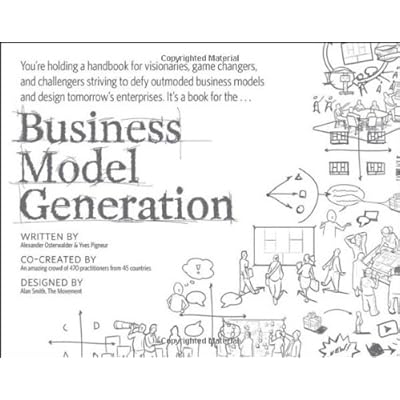
Business Model Generation: A Handbook for Visionaries, Game Changers, and Challengers
, by Alexander Osterwalder and Yves Pigneur, 2010.
This book advocates writing out all the business assumptions, on a business model canvas.
I have to admit being skeptical about the use of techniques developed in the hard sciences and engineering to business.
Subscribe to:
Posts (Atom)